
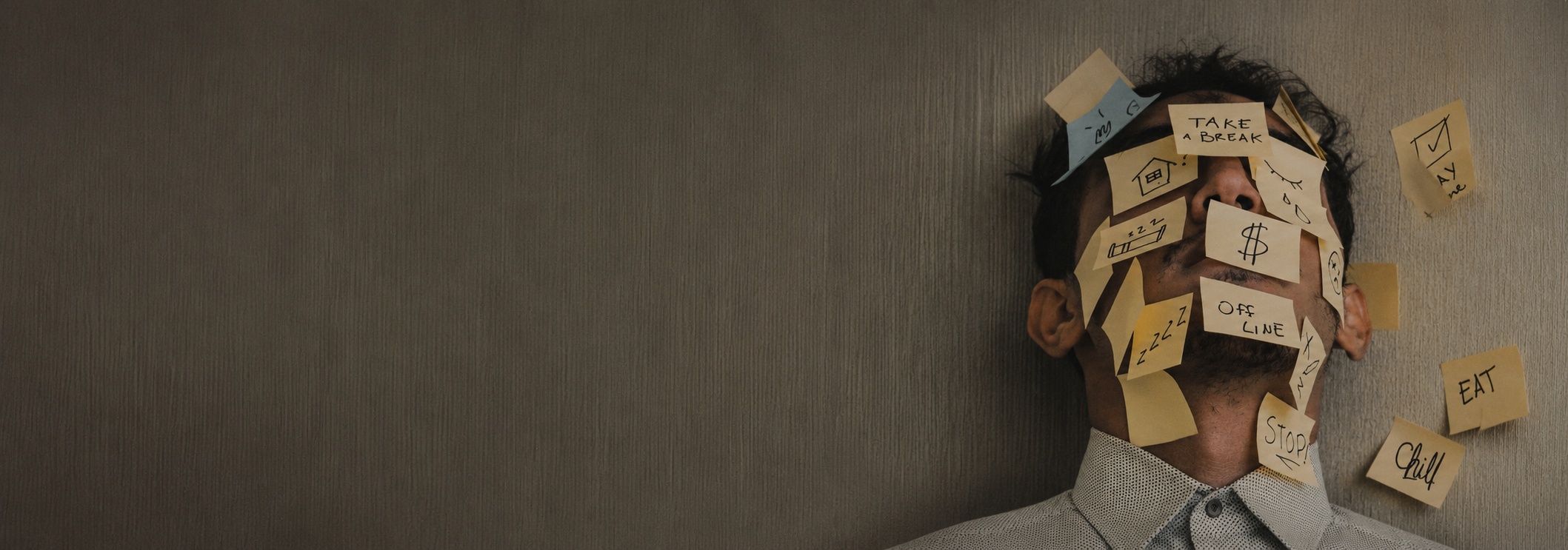
When stress stops helping us: recognising the signs of ongoing stress
When there’s always something else to do, stress can start to feel normal. How do we recognise when we’re coping - and when we’re simply carrying on?
When stress stops helping us: recognising the signs of ongoing stress
Most of us know what it feels like to be stressed. There's a deadline to meet, a difficult conversation to have, or more to do than there seems to be time for.
Sometimes, a bit of pressure can help us focus and meet a challenge. We get through it, breathe out and move on.
But what happens when the pressure doesn't let up? When there's always something else to do, someone else who needs us, or another problem to think through?
It's one thing to feel stressed about something that will pass. It's another to feel as though we're always under pressure, with little opportunity to recover.
And sometimes, we're so busy getting on with things that we don't quite realise how much it's taking out of us.
When there's always something else
Think about everything you might have to manage in an ordinary week. Work, family, relationships, household jobs, finances. Perhaps you're also worrying about someone you love or dealing with something difficult that other people don't know about.
Individually, these things might feel manageable. But when they all pile up, it can become hard to find any breathing space.
We tell ourselves we'll rest when this week is over, when that deadline has passed, when things at home are a little easier.
Except there's always something else.
Sometimes, it's not one big thing that's getting to us. It's the accumulation of lots of little things, with very little time to recover in between.
And perhaps we don't even notice how much we're carrying because we've become so used to carrying it.
Are you coping, or are you just carrying on?
Stress can affect us in different ways. We might feel anxious or restless, struggle to sleep or find it difficult to concentrate. Perhaps we're more irritable than usual, snapping at people we care about or feeling overwhelmed by things we'd normally manage quite easily.
We might feel exhausted but still find it difficult to switch off. Even when we have time to ourselves, our minds are busy going over what happened today or working out what needs to happen tomorrow.
And sometimes, we carry on regardless.
We go to work, look after the family and do everything that's expected of us. Other people might see us as capable and reliable, without realising how much effort it takes just to keep everything going.
If we're used to being the person who sorts things out or the one others turn to, our own needs can easily come last. We might tell ourselves we'll deal with how we're feeling when there's more time.
But being able to carry on doesn't necessarily mean we're okay.
And if we're always focused on what needs to be done next, how much space do we really have to notice what we're feeling?
Why some stress is different from other stress
Not all stress is bad for us. A certain amount of pressure can help us focus, rise to a challenge or do something that matters to us. We might feel nervous before an important interview, for example, and relieved when it's over.
Ongoing stress can be different. When the pressure lasts for weeks or months, with little opportunity to rest or feel that things are under control, it can begin to affect our sleep, mood, relationships and physical wellbeing.
We might have less patience than we used to. Things that once felt straightforward might seem overwhelming. We might start wondering why we're finding everything so difficult when we used to manage perfectly well.
But perhaps it's worth asking a different question.
How much have we been trying to manage, and for how long?
There's a difference between struggling with a difficult situation and expecting ourselves to keep going indefinitely, without enough time, help or space to recover.
You can't always think your way out of stress
When something is worrying us, it's natural to try to work it out. We make lists, think through different possibilities and try to anticipate what might happen next.
Sometimes, that's helpful. But sometimes, the problem isn't that we haven't thought about it enough.
Perhaps we're taking on more than we can reasonably manage, finding it difficult to ask for help, or putting other people's needs ahead of our own. Or perhaps we're in a genuinely difficult situation, and there isn't a quick or easy way to change it.
Telling ourselves to be more organised, think positively or manage our time better can leave us feeling as though we're somehow failing.
Sometimes, we need to look beyond how we can cope with the pressure and think about what's creating it in the first place.
That might mean asking for help, setting a boundary or recognising that we can't do everything. It might also mean noticing how we treat ourselves when things become difficult. Do we give ourselves a little understanding, or do we expect even more of ourselves?
These things aren't always easy to change, particularly if we've spent years being the person who holds everything together. But we don't have to keep doing things in the same way simply because that's what we're used to.
Making a little space for yourself
If you've been feeling stressed for a while, perhaps there's something worth asking yourself.
When was the last time you felt you could properly switch off? Do you have space to think about what you need, or is most of your time taken up with what other people need from you?
You don't need to have immediate answers. These questions aren't another set of things you need to get right.
Perhaps there's one thing you could ask for help with, or something that doesn't need to be done today after all.
If stress is affecting your everyday life, speaking to your GP or seeking professional support can help you work out what you need. The NHS also has practical advice on understanding and managing stress.
Counselling can offer a space where you don't have to be the capable one or look after someone else. Somewhere you can talk about what's happening and begin to make sense of how you've been feeling.
You don't need to arrive knowing exactly what's wrong. Sometimes, it helps simply to have the space to work that out with someone.
You don't have to wait until you're at breaking point
Stress is part of being human. There will always be times when life asks a lot of us. But when the demands keep coming and we have little chance to recover, it can become harder to recognise where our limits are.
Perhaps we're so busy keeping everything going that we've stopped asking ourselves how we're actually doing.
National Stress Awareness Day is a reminder to pay attention to stress, but we don't have to wait for a particular day to take it seriously.
At Untangled, we offer counselling in Bromley and the surrounding boroughs, as well as online. If you're finding things difficult, or you've been carrying a lot for longer than you'd like, we'd be happy to talk with you about what support might look like.
You can get in touch with Untangled to arrange a free, confidential 15-minute introductory call. It's a chance to tell us a little about what's bringing you to counselling, ask questions and see whether it feels right for you. There's no pressure to book a session.
You don't have to reach breaking point before your own needs matter, too.
Free · Confidential · No obligation
Read our other blog posts here